
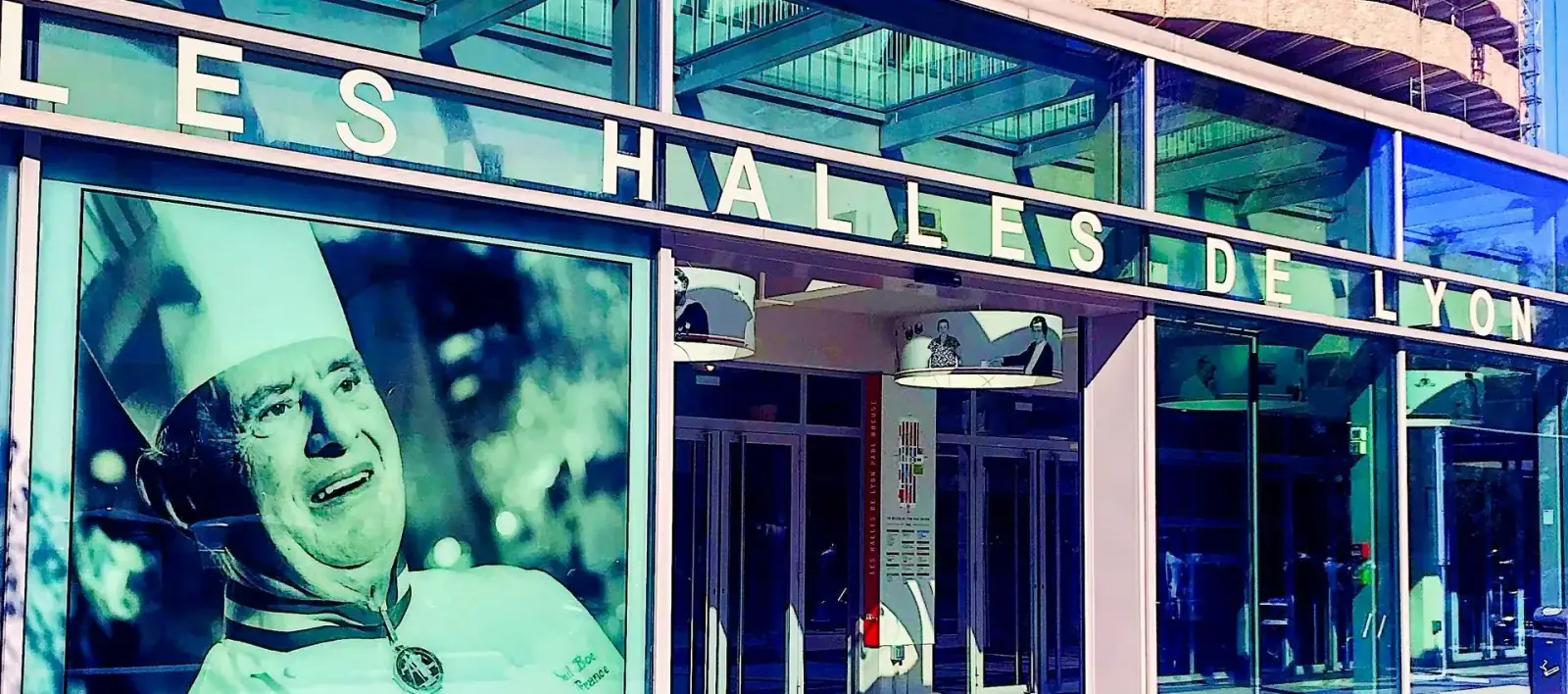
From poularde demi-deuil to the aisles that bear their names, the Mères Lyonnaises still watch over the belly of Lyon. The story of a living heritage.
Before it became a title of honour, the word "Mère" was a gesture: that of gifted women who, at the turn of the 20th century, left the kitchens of the great bourgeois households to open their own. Mère Fillioux, nicknamed the Empress of the Mères, made her name with poularde demi-deuil, those fine slivers of truffle slipped beneath the skin of a Bresse chicken. Eugénie Brazier, trained at her side, became in 1933 the first woman to earn three stars in the Michelin Guide. A lineage of cooks who feminised the profession and shaped the very idea of the Lyonnaise table.
This heritage is woven into the very architecture of Les Halles de Lyon Paul Bocuse. The aisles of the covered market honour these pioneers: allée Brazier, allée Fillioux, allée Bizolon. Each name is a dedication, each step a journey through the city's gourmet memory.
The bond goes beyond street signs. Paul Bocuse, a direct heir to this tradition handed down from Fillioux to Brazier, came here to choose his produce from the exceptional houses that still make the heart of the Halles beat: the cheesemonger Mère Richard, the charcutière Colette Sibilia, Maison Trolliet, Maison Bobosse, the Mons cheese house.
To wander beneath the great glass roof on cours Lafayette is therefore to reconnect with a craft passed down from generation to generation. The quenelle, the brioche-wrapped saucisson, the truffle and the Bresse chicken all tell the same story: that of women who turned generosity into an art, and Lyon into a world capital of taste.
A living sanctuary, the market carries on what the Mères sowed: the demand for the right product, the joy of sharing and a wholly Lyonnaise elegance. At every stall, their spirit still watches over us.