
Since 1859
Our story
From its origins to worldwide acclaim, the story of a landmark of gastronomy.
Since 1859
There is a place in Lyon where the city tells its story through the senses. It has always been nicknamed “the belly of Lyon”, and that is no mere figure of speech: here, beneath a single glass roof, beat the heart, the appetite and the memory of a city that has made the table an art of living. To step through the doors of Les Halles de Lyon Paul Bocuse is to enter a living history, woven from gestures passed down, exceptional produce and encounters that have endured for more than a century and a half.
It all begins in 1859, on the peninsula, when Lyon acquired its first great covered market on Place des Cordeliers. From that first hall of glass and iron to today's light-filled spaces, the calling has never changed: to gather under one roof the finest artisans of taste and offer the people of Lyon the most beautiful of larders. The walls have moved, the architecture has been transformed, but the soul has remained intact.
Over the decades, these aisles have witnessed the birth and rise of a true aristocracy of the palate: the Mères lyonnaises, pioneers of a generous cuisine, and the many Meilleurs Ouvriers de France who, to this day, raise every trade to the rank of excellence. Placed under the patronage of the most famous of all Lyonnais chefs, Les Halles carry on this heritage with the same rigour and the same warmth. This is their story.
Since 1859
Une histoire siecle apres siecle
1859
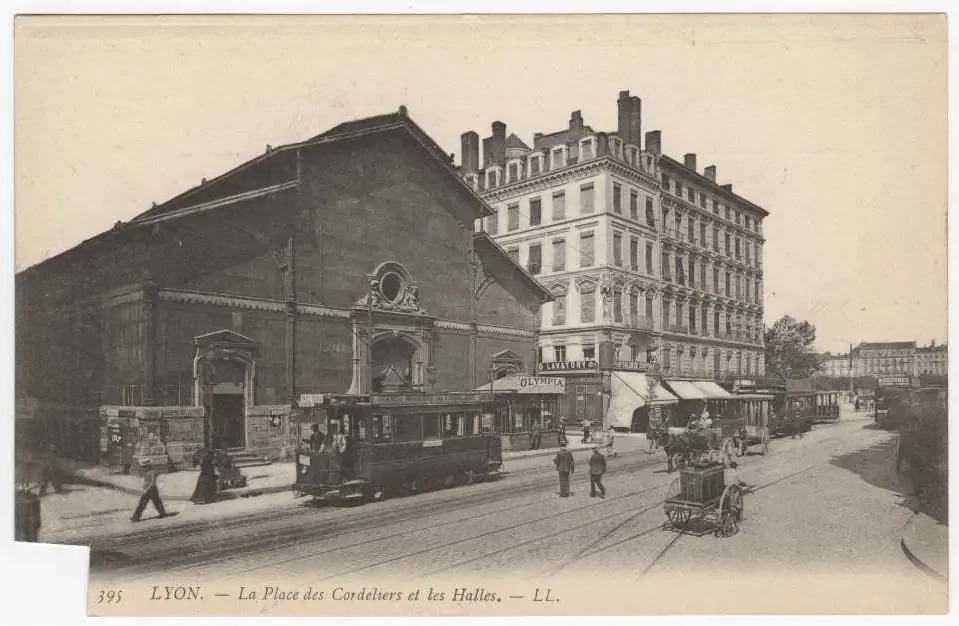
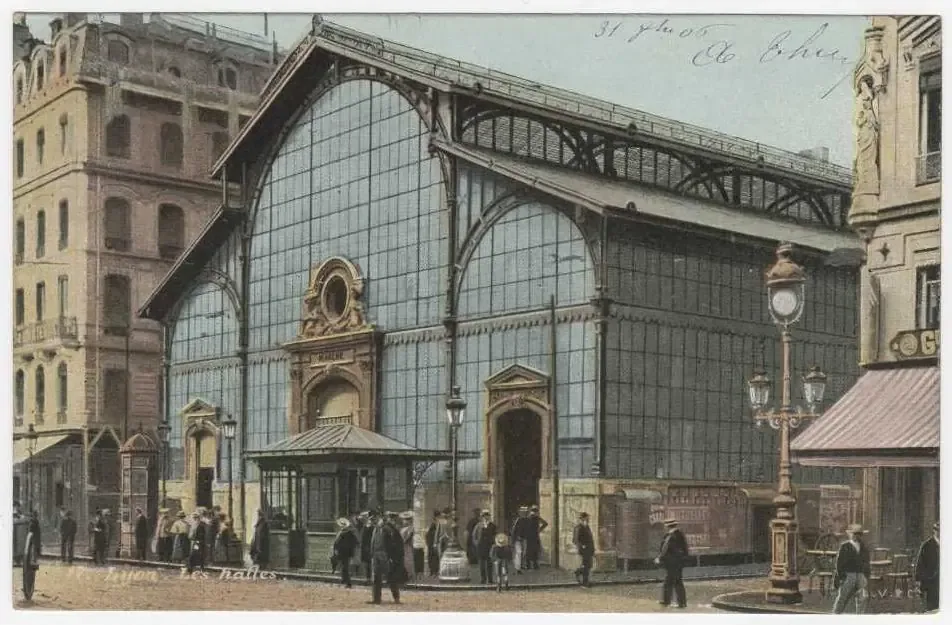
Under the impetus of Prefect Claude-Marius Vaïsse, nicknamed the “Haussmann of Lyon”, the city inaugurated its first great covered market on Place des Cordeliers. Designed by the city architect Tony Desjardins, this vast hall of glass and metal immediately won over the people of Lyon.
1859
Marvelling at its immense glass roof, residents affectionately renamed it the “Crystal Palace”. The Cordeliers hall became the great larder of the peninsula and, little by little, the nickname “the belly of Lyon” became firmly attached to the place.
1971
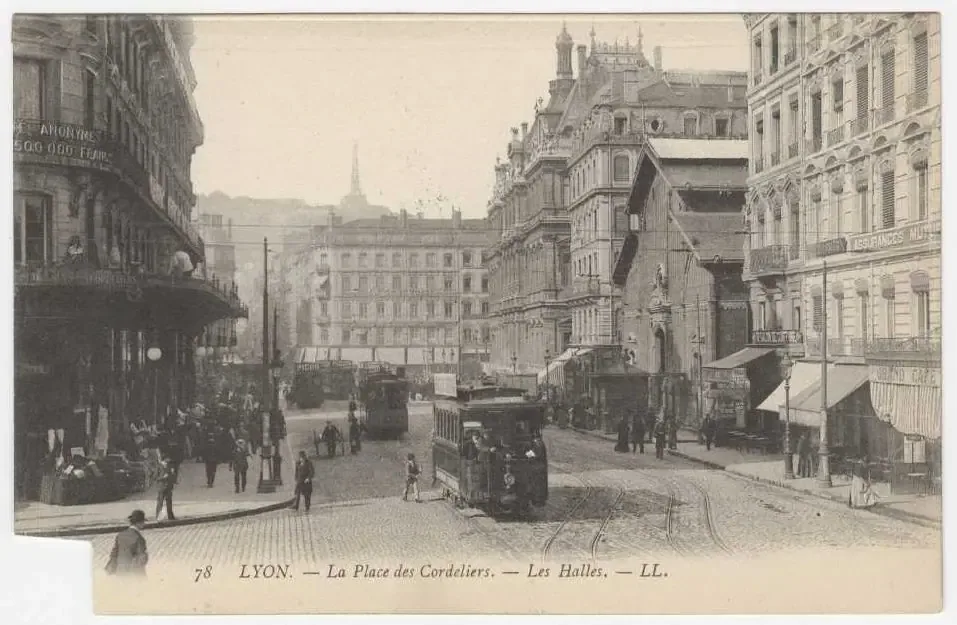
At the very start of January 1971, after more than a century of service, the historic Cordeliers hall ceased its activity and made way for redevelopment. A page of the peninsula turned amid the emotion of merchants and Lyonnais alike.
1971
Inaugurated on 17 December 1970 by Louis Pradel, mayor of Lyon, the new Halles rose in the booming Part-Dieu district, at the corner of Rue Garibaldi, Rue Lafayette and Rue Bonnel: 13,500 m² across three levels, befitting the city's gourmet ambitions.
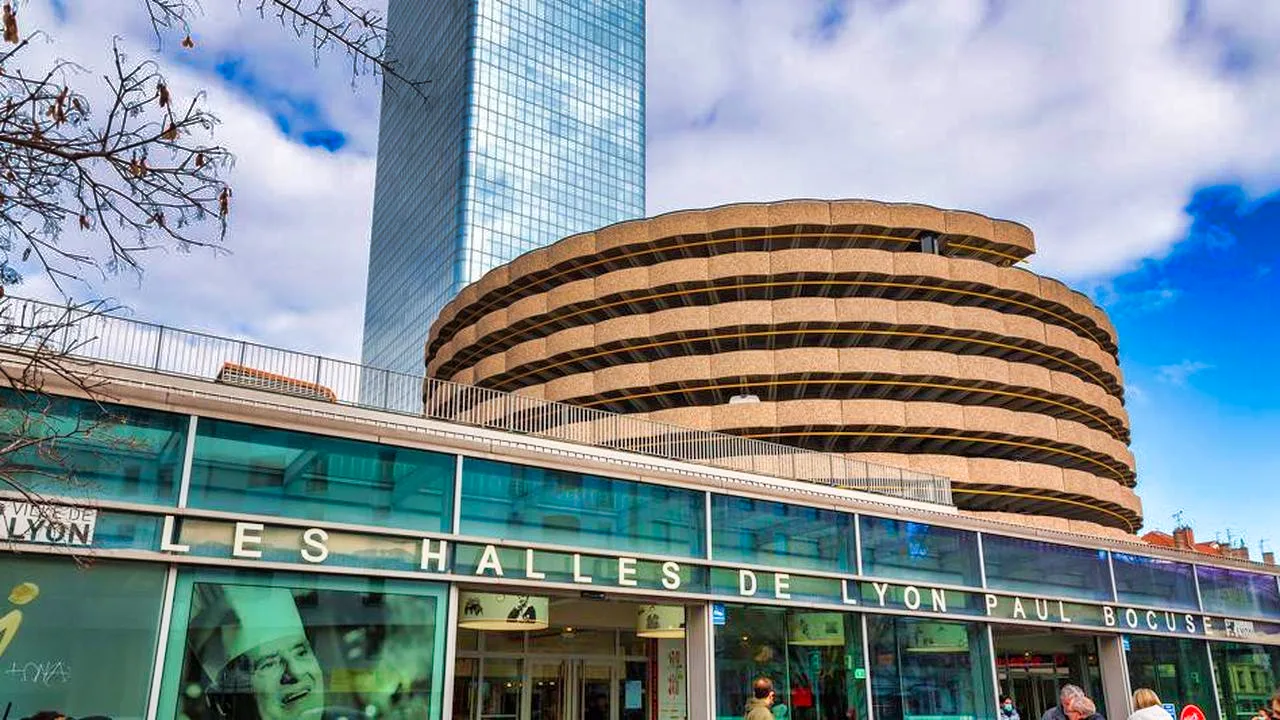
1971
The 68 merchants from the former Cordeliers hall took up their quarters there, in resolutely modern facilities: air conditioning, nearby parking and continuous opening from 8 a.m. to 8 p.m. The move was staggered through to the end of January.
1971
From the moment they opened, the new Halles brought together the finest artisans of the food trades and became the must-visit destination for gourmets, chefs and Lyonnaise families in search of exceptional produce.
2004
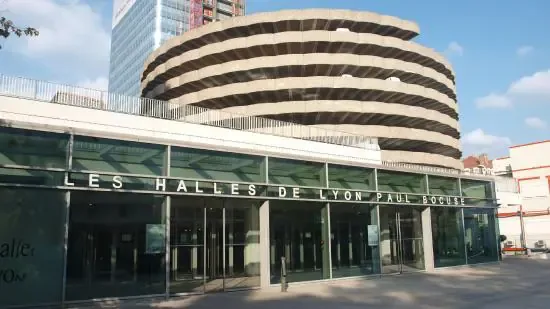
At the turn of the 2000s, a major renovation programme was launched to modernise the building while preserving its spirit. The aim: to give merchants and visitors a setting worthy of the venue's reputation.
2006
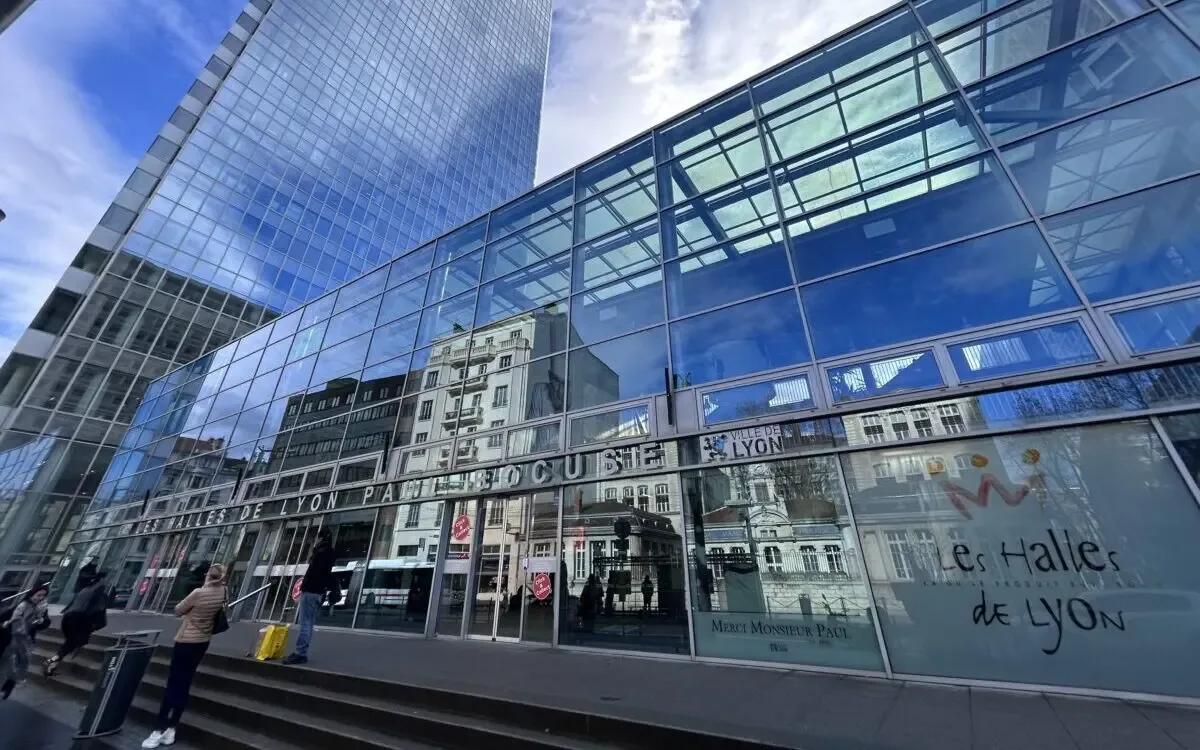
Once the works were complete, Les Halles unveiled a new face, marked by a large glazed façade opening onto cours Lafayette. Light now floods the aisles and showcases the artisans' stalls.
2006
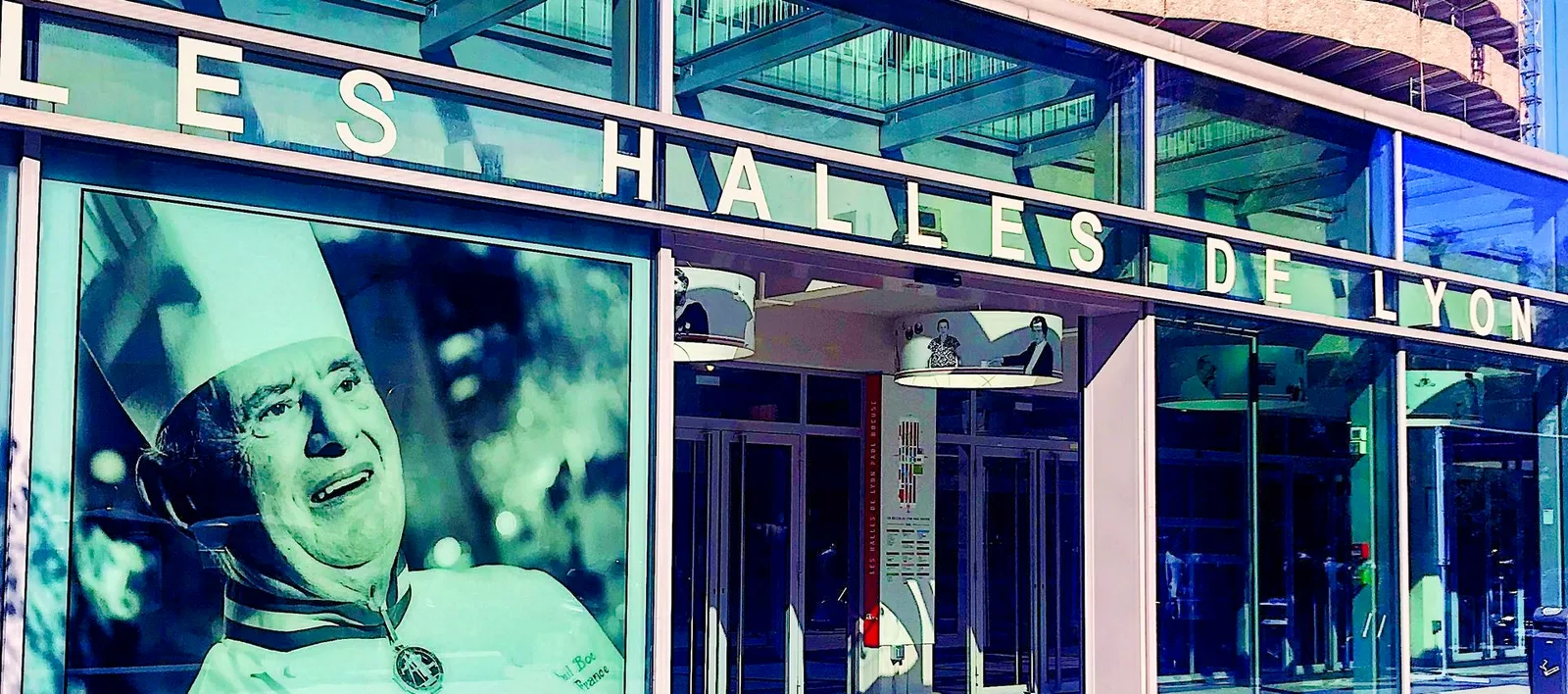
That same year, in tribute to the most illustrious of all Lyonnais chefs, Les Halles took the name Paul Bocuse. The famous cook, attached to the place, agreed to become its patron: a christening that sealed the alliance between the market and haute gastronomy.
2021
Les Halles de Lyon Paul Bocuse celebrated half a century in Part-Dieu. Fifty years after settling there, they remain a landmark of Lyonnaise cuisine and a living symbol of the city's gourmet heritage.
Aujourd'hui
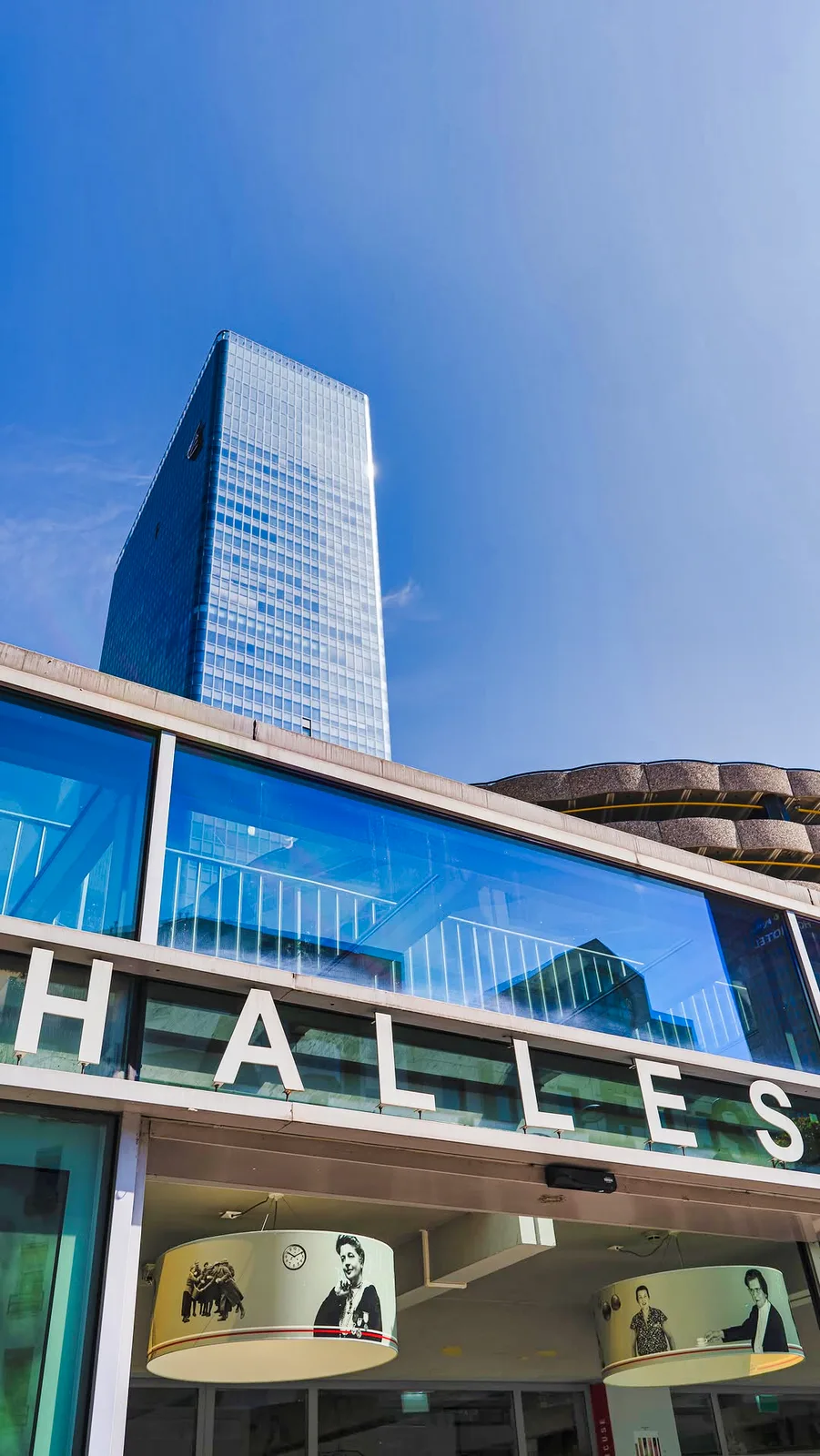
Bringing together some fifty merchants spread across a great diversity of food trades, among them many Meilleurs Ouvriers de France, Les Halles carry on the legacy of the Mères lyonnaises. Renowned well beyond France's borders, they remain true to their nickname: “the belly of Lyon”, where people come to feast, learn and share.
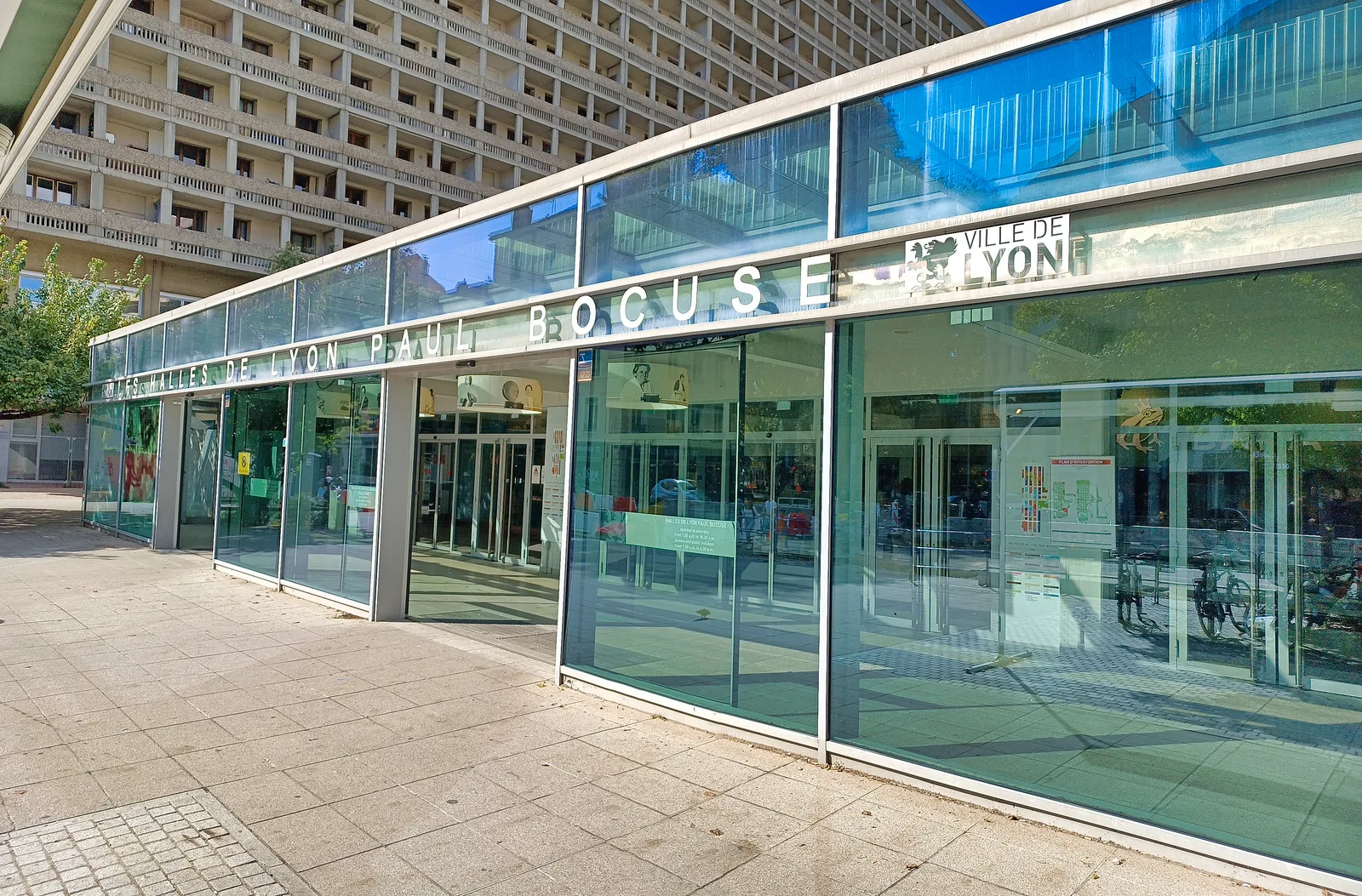
There is a place in Lyon where the city tells its story through the senses. It has always been nicknamed “the belly of Lyon”, and that is no mere figure of speech: here, beneath a single glass roof, beat the heart, the appetite and the memory of a city that has made the table an art of living. To step through the doors of Les Halles de Lyon Paul Bocuse is to enter a living history, woven from gestures passed down, exceptional produce and encounters that have endured for more than a century and a half.
Since 1859
Les Halles through the ages
Cartes postales & archives anciennes — Les Halles de Lyon Paul Bocuse
Our values
- Excellence
- Conviviality
- Tradition
- Authenticity
- Transmission
- Indulgence
- Craftsmanship
- Sharing
Since 1859
Une histoire qui se vit aujourd'hui
Decouvrez les artisans qui perpetuent cette histoire, etal apres etal, et preparez votre visite des Halles.